


us israeli military inetgration policy lab july2026

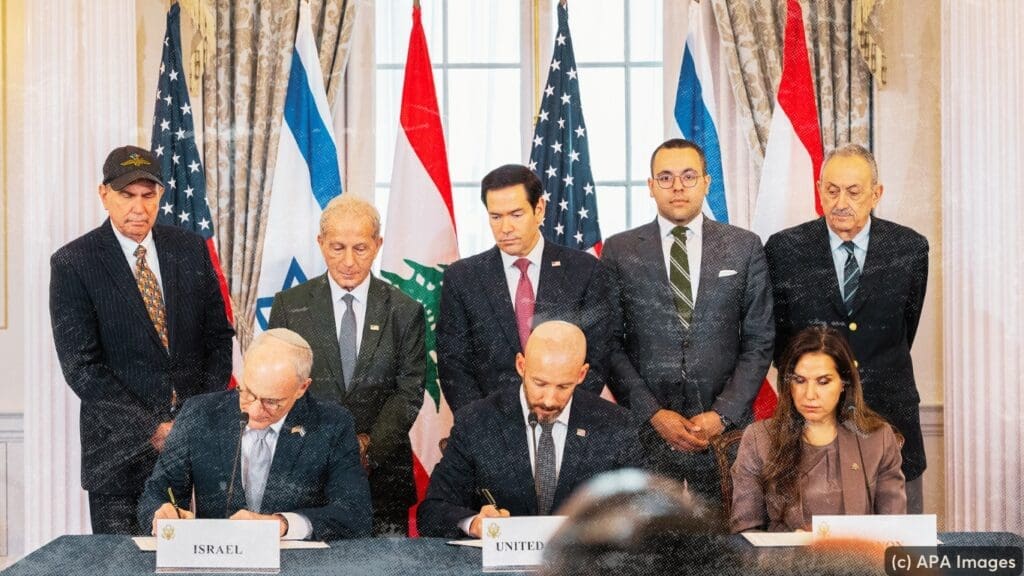
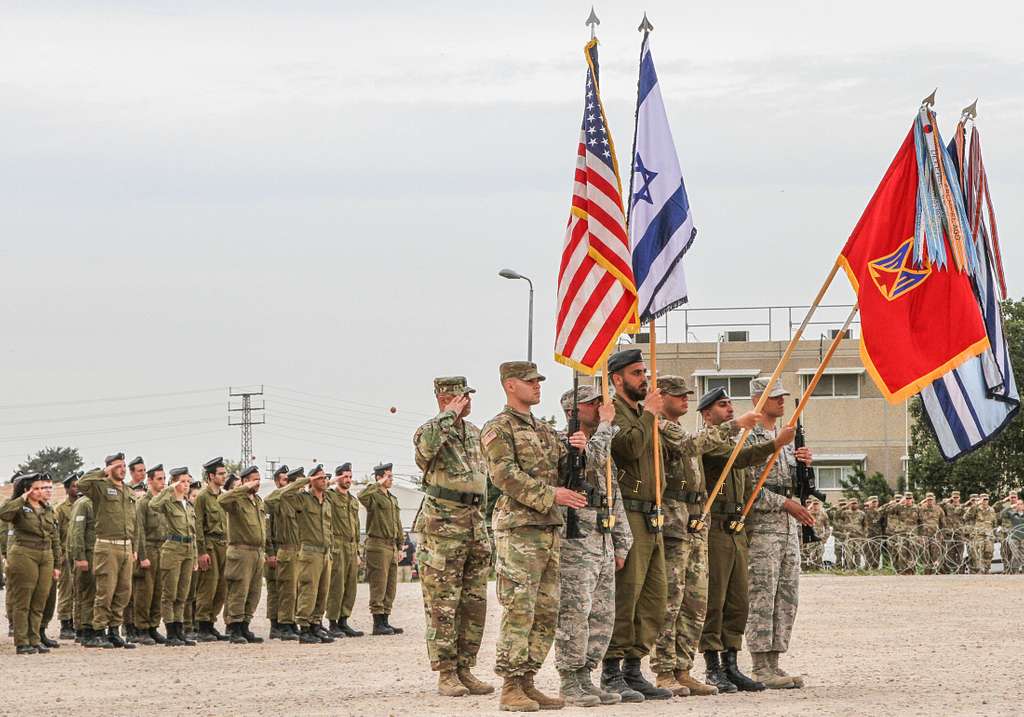
As criticism of US military support for Israel reaches unprecedented levels, leaders on the Israeli and US right are proposing a transformation of the “special relationship.” Rather than relying on traditional military aid, they envision integrating Israel more deeply into the US military-industrial complex and turning Israel into a “Super Sparta.” The aim is to insulate the Israeli regime from international pressure to end its ongoing genocide and occupation. In doing so, Israel’s relationship with the US would shift from dependence to deeper symbiosis.

What would this integration actually look like? Can Israel produce enough of its own weapons, technology, and military infrastructure to sustain its occupation and wars while insulating itself from growing international pressure? Or do its military industries remain fundamentally dependent on foreign financing, procurement, and political support? Most importantly, how would these strategic shifts impact the pro-Palestine movement?

To explore these questions and more, we are joined by policy expert Lara Friedman and investigative journalist and writer Antony Loewenstein in this policy lab.

Al-Shabaka: The Palestinian Policy Network is an independent, non-partisan, and non-profit organization whose mission is to convene a multidisciplinary, global network of Palestinian analysts to produce critical policy analysis and collectively imagine a new policymaking paradigm for Palestine and Palestinians worldwide.
With: Lara Friedman, Antony Loewenstein
In this article

Latest Analysis

 Politics
The Israeli genocide in Gaza has laid bare the extent to which the world remains structured by racial colonial hierarchies and exposed the limits of an international legal order that emerged alongside Western imperial expansion. In this roundtable, Palestinian legal scholar Noura Erakat and Jake Romm, legal advisor and US representative for the Hind Rajab Foundation (HRF), reflect on what becomes of international law after Gaza.
Al-Shabaka Nour Joudah
Noura Erakat,Jake Romm· Aug 25, 2026
 Politics
When four donkeys were evacuated from Gaza to a German zoo in November 2025, their rescue was celebrated as a humanitarian success. Yet while the animals were transported to safety, given new names, and described as leaving behind "hunger and misery, beatings and hardship," Palestinian children have been unable to evacuate amid a relentless ongoing genocide. In this commentary, Asmaa Abu Mezied examines how humanitarian concern operates through racialized hierarchies of grievability that render animal suffering more visible and rescue-worthy than Palestinian human life. She further argues that animal welfare interventions are materially entangled with the dispossession of Palestinian survival infrastructure, showing how it can become an enabling mechanism of colonial violence rather than its interruption.
Asmaa Abu Mezied· Aug 11, 2026
 Civil Society
After Hamas’s recent announcement that it will hand over governing authority in Gaza to the National Committee for the Administration of Gaza (NCAG), urgent questions about who will shape Gaza's future and on whose terms have reemerged. These questions are particularly salient given that the NCAG’s framework reflects the same technocratic and externally imposed logic that has come to characterize the dominant international proposal for Gaza's reconstruction: one that treats it as a technical exercise in disaster management, sidelining Palestinian sovereignty, return, and self-determination. In contrast, this roundtable asks what it means to understand Gaza as an Indigenous region rather than simply a besieged strip or humanitarian space. Nour Joudah and Dena Qaddumi explore how Indigenous frameworks reshape prevailing understandings of urbanism, reconstruction, and governance; why reconstruction must begin with Palestinian agency and reclamation rather than externally designed colonial master plans; and how rebuilding is already taking place through everyday forms of Indigenous endurance, social organization, and spatial resistance under conditions of ongoing genocide.
Nour Joudah,Dena Qaddumi· Jul 23, 2026