Article - Mapping Palestine: Decolonizing Spatial Practices

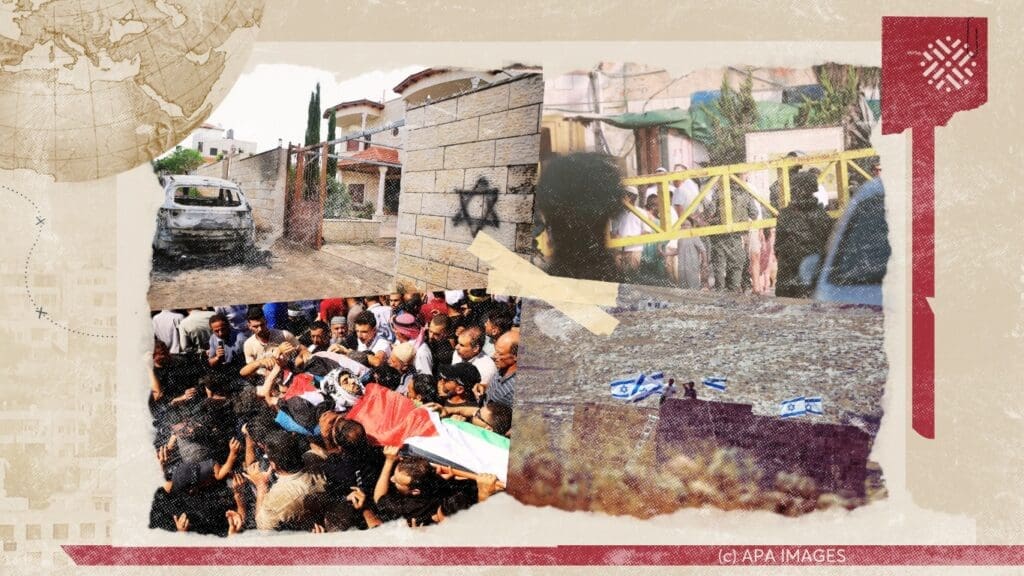
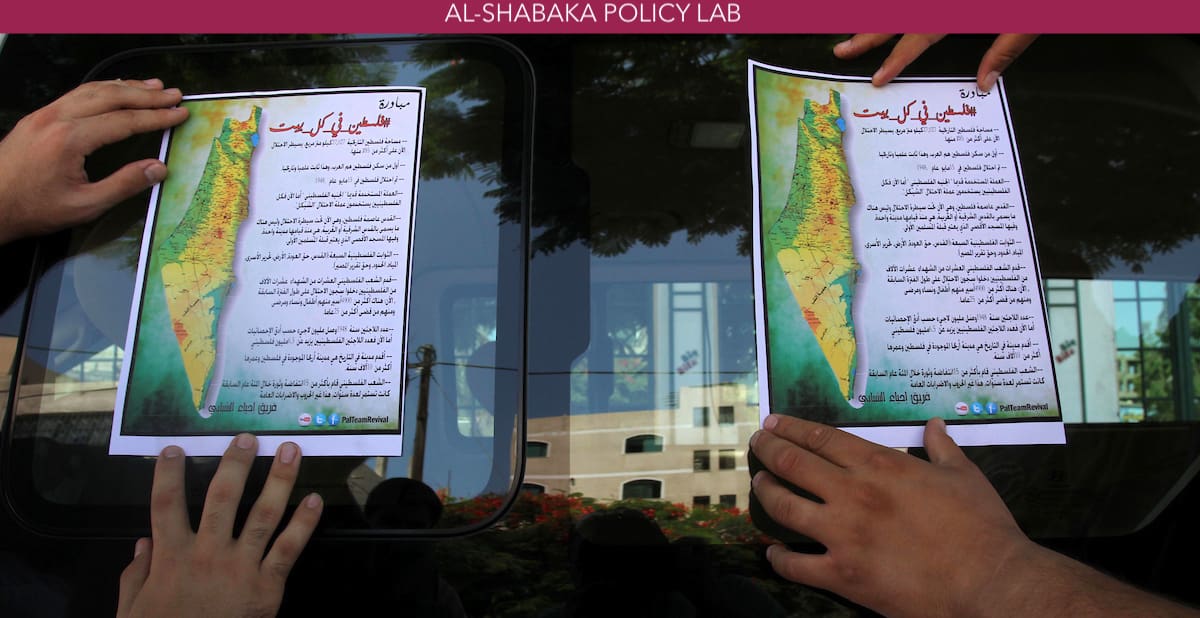
“The practice of mapping in Palestine-Israel has long been an exercise in power, imperialism, and dispossession.” So writes Zena Agha in her recent policy brief for Al-Shabaka. But how can maps be reclaimed as tools for resistance? And can they be utilized to help envision a different Palestinian future?

In our first policy lab of 2020, Zena Agha and Ahmad Barclay discuss the ways in which maps and other visualization tools serve as sites to entrench power disparities as well as to empower communities to reimagine their colonized homelands.

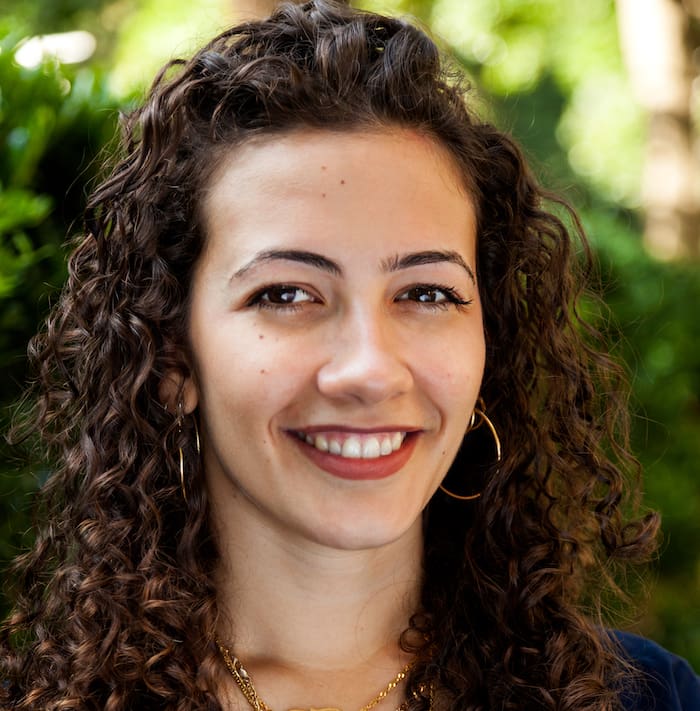
Zena Agha is the Interim Director of the British Palestinian Committee. She previously served as Al-Shabaka’s US Policy Fellow (2017–2019), where her research focused on Israeli spatial practices, climate change, and Palestinian adaptive capacities. She was awarded the Kennedy Scholarship to pursue an MA in Middle Eastern Studies at Harvard University and holds a PhD from Newcastle University, where her research examined colonial cartography in Palestine. Her writing has appeared in The New York Times, Foreign Policy, The Nation, The Independent, Foreign Affairs, NPR, and El País.
Ahmad Barclay is an architect, designer, and data visualization specialist currently serving as Head of Advanced Data Formats at the Office for National Statistics in the UK. He is a founding partner of Visualizing Impact, a visual communication studio whose projects include Visualizing Palestine. He previously worked with DAAR (Decolonizing Architecture Art Residency) on the “Laboratory of Returns” project, investigating architectural models for the return of Palestinian refugees, and his research has focused on architecture and planning as tools of spatial resistance in the Palestinian struggle.

Latest Analysis

 Politics
The Israeli genocide in Gaza has laid bare the extent to which the world remains structured by racial colonial hierarchies and exposed the limits of an international legal order that emerged alongside Western imperial expansion. In this roundtable, Palestinian legal scholar Noura Erakat and Jake Romm, legal advisor and US representative for the Hind Rajab Foundation (HRF), reflect on what becomes of international law after Gaza.
Al-Shabaka Nour Joudah
Noura Erakat,Jake Romm· Aug 25, 2026
 Politics
When four donkeys were evacuated from Gaza to a German zoo in November 2025, their rescue was celebrated as a humanitarian success. Yet while the animals were transported to safety, given new names, and described as leaving behind "hunger and misery, beatings and hardship," Palestinian children have been unable to evacuate amid a relentless ongoing genocide. In this commentary, Asmaa Abu Mezied examines how humanitarian concern operates through racialized hierarchies of grievability that render animal suffering more visible and rescue-worthy than Palestinian human life. She further argues that animal welfare interventions are materially entangled with the dispossession of Palestinian survival infrastructure, showing how it can become an enabling mechanism of colonial violence rather than its interruption.
Asmaa Abu Mezied· Aug 11, 2026
 Politics
In this policy lab, we are joined by policy expert Lara Friedman and investigative journalist and writer Antony Loewenstein to explore the shift in Israel’s relationship with the US from dependence to deeper symbiosis.