Article - Arab Normalization with Israel: Current Status and Potential Consequences

Have Arab states abandoned the Palestinian people?

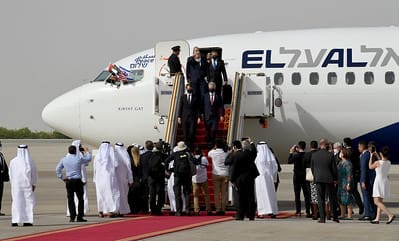
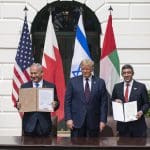
In this policy lab, Al-Shabaka analysts Tareq Baconi and Ibrahim Fraihat weigh in on the historical understanding of normalization, implications of the UAE-Israel agreement and other normalization developments across the region, and ways forward for Palestinians in light of these changing dynamics.

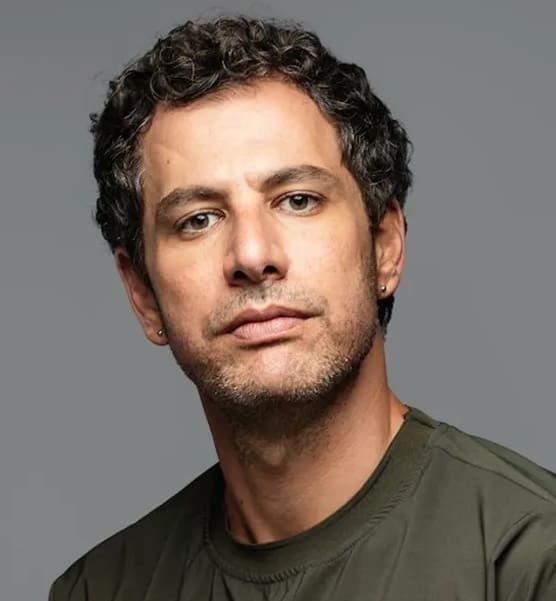
Tareq Baconi serves as the president of the board of Al-Shabaka. He was Al-Shabaka’s US Policy Fellow from 2016 – 2017. Tareq is the former senior analyst for Israel/Palestine and Economics of Conflict at the International Crisis Group, based in Ramallah, and the author of Hamas Contained: The Rise and Pacification of Palestinian Resistance (Stanford University Press, 2018). Tareq’s writing has appeared in the London Review of Books, the New York Review of Books, the Washington Post, among others, and he is a frequent commentator in regional and international media. He is the book review editor for the Journal of Palestine Studies.

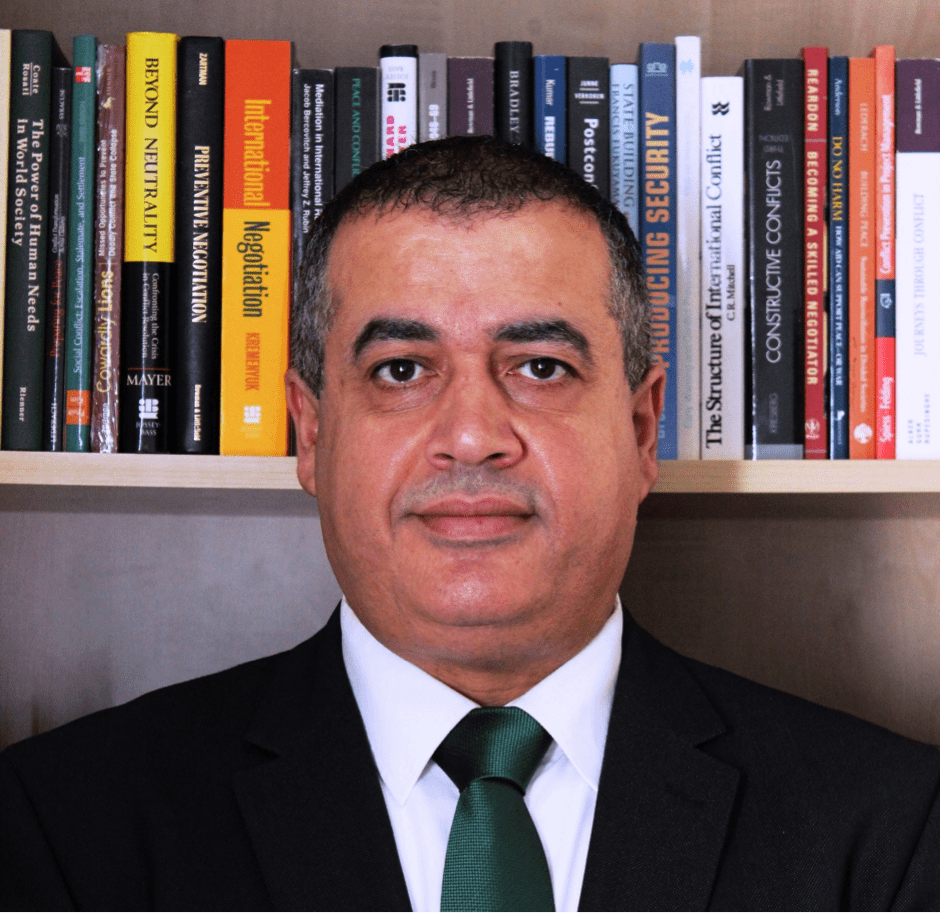
Ibrahim Fraihat is Associate Professor of International Conflict Resolution at the Doha Institute for Graduate Studies and a non-resident fellow at Deakin University’s Middle East Studies Forum in Australia. He previously served as Senior Foreign Policy Fellow at the Brookings Institution and taught conflict resolution at Georgetown University and George Washington University. His recent books include Conflict Mediation in the Arab World (Syracuse University Press, 2023), Rebel Governance in the Middle East (Palgrave, 2023), Iran and Saudi Arabia: Taming a Chaotic Conflict (Edinburgh University Press, 2020), and Unfinished Revolutions: Yemen, Libya, and Tunisia after the Arab Spring (Yale University Press, 2016). He holds a doctorate in conflict analysis and resolution from George Mason University and is the recipient of that university’s Distinguished Alumni Award (2014).
Latest Analysis

 Politics
The advisory opinions issued by the International Court of Justice on Palestine reveal both the possibilities and the limits of international law, which has come under intense scrutiny amid the Israeli regime’s ongoing genocide in Gaza and broader settler-colonial project across Palestine. Acknowledging the persistent gap between legal principle and political enforcement, this policy brief examines how these opinions can be leveraged to strengthen legal and diplomatic accountability at both the international and domestic levels. It argues that the opinions provide an opportunity to move legal discourse on Palestine beyond the dominant UN framework of statehood within the 1967 borders and to reassert the Palestinian people’s right to self-determination within a broader liberation-oriented framework aimed at ending settler colonialism and advancing justice for Palestinians as a whole.
Al-Shabaka Dana Farraj
Dana Farraj· Jul 1, 2026
 Politics
The US-Israeli war on Iran and Lebanon, as well as the ongoing genocide in Palestine, are reshaping the political landscape of the region. Alliances are being recalibrated, and old assumptions about US power are being tested. The war has also underscored how deeply the global economy remains tied to fossil fuels and to the strategic importance of the Gulf within international energy and trade networks. In this roundtable, Palestinian analysts Diana Buttu and Adam Hanieh examine what this moment reveals about the changing architecture of US imperial power, the regional order now taking shape, and the implications for the struggle for Palestinian liberation.
Diana Buttu,Adam Hanieh· Jun 10, 2026
 Politics
People across the world are living through a moment of profound crisis. The ongoing genocide in Gaza, the US-Israeli war on Iran and Lebanon, the resulting energy and economic shocks, and the erosion of the international legal order are unfolding alongside the fragmentation of the Western-led global system. Together, these converging tremors are exposing the limits of US hegemony, reshaping the strategic positions of Arab Gulf states and China, and intensifying debates over multipolarity, regional realignment, and South-South solidarity. In this roundtable, Yara Hawari and Tareq Baconi reflect on this impasse, highlighting the centrality of Palestine to understanding the historic transformations the world is witnessing today. They discuss the bankruptcy of the liberal international order, the changing dynamics of the US-Israeli imperial power in West Asia, and the ways Palestine has emerged as a converging point through which a different global order may be forced into being.
Al-Shabaka Yara Hawari
Yara Hawari,Tareq Baconi· May 26, 2026