- Topics
-
Topics
See our analysis on civil society and how it shapes culture, politics, and policies
Read our insights on the shifting political landscape and what it means for Palestine
Learn more about the policies and practices shaping the Palestinian economy
Strengthen your understanding of the unique conditions for Palestinian refugees across the Middle East
-
- Analysis
-
Analysis
In-depth analysis on existing or potential policies that impact possibilities for Palestinian liberation.
Insights and perspectives on social, political, and economic questions related to Palestine and Palestinians globally.
Concise analysis into a specific policy, its background and implications.
Commentary that brings together insights from multiple analysts.
Compilations of past Al-Shabaka works surrounding a specific theme.
Longer-form, ad hoc projects that seek to confront research questions outside the scope of our regular analysis.
A policy-driven research initiative by Al-Shabaka: The Palestinian Policy Network.
Our monthly webinar series that brings together Palestinian experts.
Featured
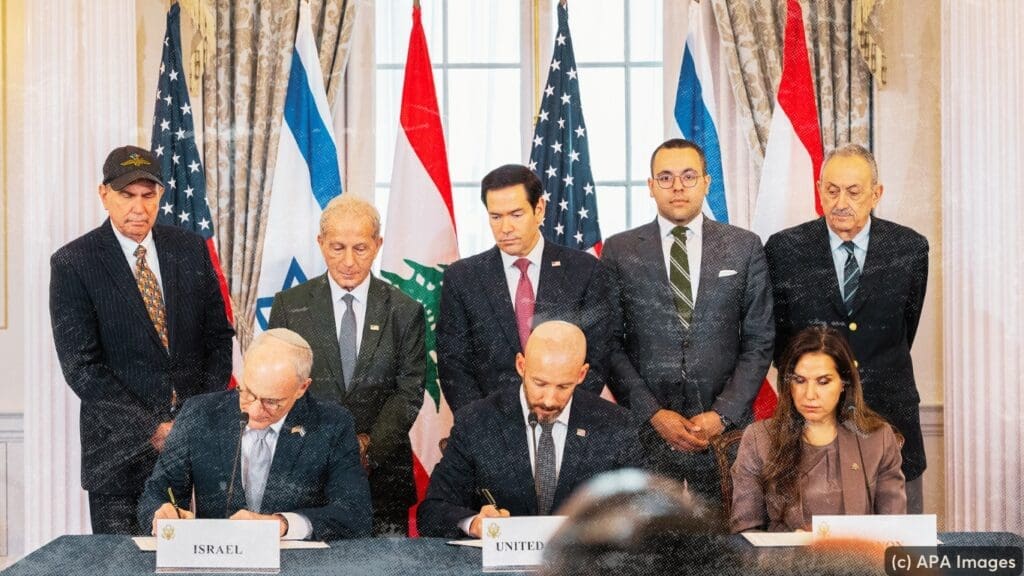
On June 26, 2026, Lebanon, the US, and the Israeli regime signed a Trilateral Framework against the backdrop of fierce military attacks on Lebanon and the invasion of its south. This aggression was part of the broader US-Israeli regional assault that also devastated Iran, Syria, and Palestine, upending the geopolitical order. In this commentary, we speak with Al-Shabaka policy analyst Jaber Suleiman, who examines pivotal questions about this framework agreement and its implications for Palestinian refugees in Lebanon and the liberation struggle more broadly. He emphasizes the grave implications of this agreement, as it makes Israeli withdrawal from Lebanese territory conditional on the disarmament of Hezbollah, thereby holding the resistance factions and the Lebanese state responsible for ending the war and the occupation, while absolving Israel of accountability. Jaber Suleiman· Oct 14, 2026
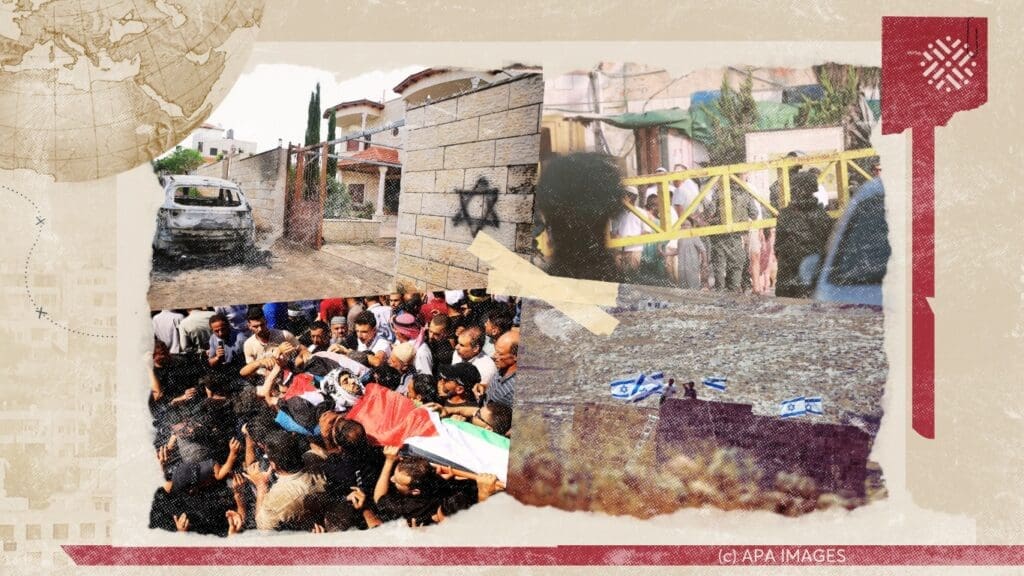
 This Focus On engages with some of the most pressing aspects of this escalation in the West Bank since October 7, 2023. It features analyses by Al-Shabaka members and contributors that show how collective punishment of Palestinians has led to a collapse in access to food, healthcare, work, and education. The compilation also examines the Palestinian people’s resistance to the expansionist Israeli scorched-earth policy, and the political leadership’s complicity and failures.
 Al-Shabaka: The Palestinian Policy Network· Sep 23, 2026
 In this Policy Lab, Al-Shabaka analyst Amjad Iraqi joins host Tariq Kenney-Shawa to examine Israel’s electoral landscape, the limits of its so-called opposition camp, and what the election means for the future of the Palestinian struggle.
 Amjad Iraqi· Sep 22, 2026
-
- Resources
- Media & Outreach
- The Network
The World Radicalized by the Gaza Genocide
This commentary is based on Tareq Baconi’s contributions at an October 2025 panel event with Novara Media. The recording may be viewed in full here.
Introduction
October 7, 2023, marked a paradigmatic rupture in how Palestine is discussed and imagined. Until that moment, international discourse had been trapped in the vocabulary of statehood and peace processes. The Palestinian question was framed as a conflict to be managed rather than a structure of domination to be dismantled, but October 7 forced the world to confront the realities Palestinians have long named: settler colonialism, the ongoing Nakba, Zionism, and Israeli apartheid.
This rupture is not merely rhetorical; it marks a substantive shift in global political understanding. Discourses of decolonization and accountability now permeate arenas once confined to the diplomatic language of a two-state solution. Israel’s assaults on Gaza have shattered the pretense that its violence is episodic or defensive, exposing genocide as a structural feature of its settler-colonial project. For Palestinians, this moment reaffirms a longstanding truth: liberation cannot be secured through negotiation within an unjust system but requires confronting the structures that enact their dispossession and erasure.
For the world, as this commentary argues, the genocide has catalyzed a broad radicalization. When crowds march through global capitals demanding a free Palestine, they simultaneously articulate demands for the abolition of racialized capitalism, extractive regimes, climate injustice, and all forms of contemporary fascism. Palestine is understood through an intersectional lens, one that binds these struggles together. This radical understanding of structures of power reframes Palestine not as an isolated crisis but as a lens through which the broader architecture of global domination becomes visible.1
The Rupture of October 7
In the months leading up to October 7, the conditions on the ground had already rendered the pre-existing paradigm untenable. Palestinians were managed through aid and economic incentives rather than granted rights or justice; the entire international architecture—the peace process, donor frameworks, and diplomatic language—functioned to contain and marginalize Palestinian aspirations while legitimizing Israel.
Before October 7, the world treated Israel as a legitimate state within the family of nations, while Palestinians were cast either as a humanitarian problem to be managed through aid or as a security threat to be contained within the frameworks of the “War on Terror.” Beginning in 1993, the Oslo process—with its endless negotiations and conferences—sustained the illusion of progress while entrenching apartheid. In this context, diplomacy functioned as a form of containment: the so-called “peace process” managed colonial violence by translating it into technocratic language.
Hamas is a convenient diversion, allowing Israel to wage mass violence under the guise of self-defense while escaping accountability for the system that produced resistance Share on XThis “managerial” paradigm was premised on erasing history. The Nakba became a closed chapter, and ongoing colonization was reinterpreted as a “security issue.” Yet, by October 6, 2023, this framework had already failed on its own terms. It produced neither peace nor stability, only deepening domination and despair. Before Hamas’s operation, that year had already become the deadliest for Palestinians in decades, especially for children, even as the world continued to treat Palestinian demands as a side issue to be pacified rather than an ongoing political struggle for liberation. October 7 showed that decades of “management” had not created order but incubated resistance.
In addition, October 7 exposed a core contradiction in Zionism: the belief that settlements and territorial expansion could ensure lasting safety for Jewish people in Palestine without ever having to deal with the indigenous population being supplanted or oppressed. Zionism presented colonization as redemption and displacement as safety. For decades, this illusion held because Western powers protected it and because Palestinians were rendered invisible in the narrative of Jewish return. October 7 revealed that no lasting safety can be built on the erasure of others. Indeed, the very logic that promised security produced perpetual insecurity.
Today, the question of Jewish safety is clearly inseparable from the question of Palestinian freedom. As long as Zionism, with its commitment to domination and colonialism, persists, it condemns people to a life of unending violence and thereby ensures that resistance to its very foundations will continue. By exposing this contradiction, October 7 redefined the parameters of justice: no solution that preserves a settler-colonial order can ever be just. Indeed, the possibility of coexistence depends not on managing Palestinians but on dismantling the system that made their dispossession possible.
The Rush to Restore the Old Order
Amid an ongoing genocide, governments and international institutions scrambled to reassert the familiar vocabulary of the pre-October 7 world. Ceasefires, reconstruction pledges, state recognition, and declarations of support for a “two-state solution” resurfaced as gestures of reassurance to a shaken order. Yet, these measures are futile attempts to restore normalcy rather than confront the reality that the old normal was the problem. They function as tools of denial and of perpetuating injustice by attempting to reassert Israel’s legitimacy while pacifying global outrage. Every effort is being expended today to re-legitimize the Israeli state after the mask has been torn off its reality of apartheid and genocide. While millions marched in the streets of world capitals demanding a Free Palestine, world leaders are asking us to unsee a genocide, and to return to past delusions.
Will Palestinians be able to build on this global groundswell of solidarity…to further erode the false and violent promises of Zionism and advance the struggle for a Free Palestine? Share on XA ceasefire is indeed necessary—it saves lives and allows for humanitarian relief—but it cannot be mistaken for justice. As many Palestinian experts have consistently emphasized, reconstruction without sovereignty only deepens dependency. Recognition of a shrunken Palestinian “state” that lacks control over its land and its borders entrenches partition rather than freedom. These are nothing more than vacuous measures that are aimed at placating Palestinians; the proof for this is that none of these measures consider the urgency of holding the perpetrators of genocide accountable for their war crimes, as a prerequisite to ending the violence unleashed against Palestinians. Each of these steps seeks to put the genie back in the bottle, to return the world to October 6, when apartheid was tolerated and the Nakba ignored. Yet the illusion cannot be restored. The world has seen the structure of violence too clearly to forget it.
Hamas and the Politics of Distraction
Central to this attempt to restore the old order is the fixation on Hamas. The demand to “destroy Hamas” operates as a pretext for genocide. It allows Israel and its allies to frame total war against Palestinians as counter-terrorism, collapsing resistance into criminality. Under the Israeli colonial logic, all resistance—armed, legal, cultural, or diplomatic—is illegitimate because it refuses subjugation.
The fixation on Hamas is a red herring; when the Israeli regime talks about eradicating Hamas, what it means is exterminating all Palestinians. Hamas has undeniably suffered significant losses—its leadership, personnel, and much of its infrastructure have been severely degraded. But Hamas is not reducible to its members; it is an idea, an ideology rooted in resistance.
The focus on Hamas mistakes the symptom for the structure. Even if Hamas were dismantled tomorrow, the genocide and the siege of Gaza, the apartheid system, and the denial of return would persist. At the same time, resistance would reconstitute itself in new forms because the condition that gives rise to it—colonial domination—remains. The demand to eradicate Hamas is thus not a strategy for peace but a declaration of intent to suppress any expression of Palestinian political will. In this sense, Hamas becomes a convenient diversion, allowing Israel to wage mass violence under the guise of self-defense while escaping accountability for the system that produced resistance.
For Palestinians, this moment carries both peril and promise. History teaches us that colonized peoples are never guaranteed victory: colonial regimes have rendered some Indigenous populations extinct, while others survive only through the enduring burdens of intergenerational trauma. Indeed, the liberation of Palestine is not inevitable—but it is certainly possible; and it is up to Palestinians to secure it. This moment places us at a critical historical crossroads. Zionism has lost much of its propaganda apparatus, and this erosion of narrative dominance exposes the vulnerability of the Israeli regime. Will Palestinians be able to build on this global groundswell of solidarity—this moment of clarity—to further erode the false and violent promises of Zionism and advance the struggle for a Free Palestine?
Western Colonial Mindset Exposed
As colonized people, Palestinians will continue to resist the forces that dispossess and oppress them—whether in Gaza or across all geographies. The liberation of Palestine is no longer seen as a local or regional cause; rather, it has become the moral and political hinge of an emerging global consciousness. The diaspora plays a crucial role in this transformation. Scattered across continents, Palestinians are shaping discourse in universities, parliaments, and streets. Their struggle connects with movements worldwide for climate justice, racial equality, and broader decolonization. The attempt to criminalize their speech—through sanctions, censorship, and smear campaigns—demonstrates their growing influence. By asserting the vocabulary of liberation, Palestinians in exile and those within the broader solidarity movement are dismantling the discursive foundations of empire itself.
This is precisely what a free Palestine means: to dismantle apartheid, to reclaim Palestine, and to usher in a future of freedom and justice between the river and the sea Share on XAfter all, October 7 revealed the colonial continuities underlying the global order. Western governments’ response to Israel’s assault on Gaza—military aid, diplomatic cover, and the repression of solidarity—exposed the persistence of a colonial mindset beneath the veneer of liberalism. The institutions built after World War II to guarantee universal rights have become mechanisms for preserving hegemony. When international law is selectively applied, it ceases to be law and becomes the language of domination.
The genocide in Gaza has thus become a mirror in which the world sees itself. It reflects the racialized structure of global power that links Palestinian dispossession to broader systems of extraction and control—from resource theft to border militarization to the policing of migrants. Palestine is not an isolated crisis but the frontline of a global struggle between empire and global justice. To demand freedom for Palestine is to demand an end to the colonial order that sustains exploitation everywhere. Decolonization is not only about borders; it is about dismantling imperial capitalism, militarism, and the global hierarchies that sustain them. Palestinians must continue to articulate liberation as part of a shared global agenda. To speak of freedom from the river to the sea is to articulate a universal horizon of justice; the global reckoning that followed October 7 revealed that such a possibility can be imagined, but the struggle now is to make it durable.
Conclusion
October 7 did not invent new politics; it revealed the truth of an old one. It exposed the moral bankruptcy of a world order that calls itself liberal while underwriting genocide. It shattered the myth that peace could be achieved without confronting the structure of dispossession and erasure itself. The attempt to resurrect the “peace process” is an effort to bury this clarity under the language of diplomacy.
Ultimately, this genocide has radicalized the world, and people cannot unsee a live-streamed annihilation defended under the banner of liberal democracy. The world has realized that Israel can no longer exist as an apartheid regime. This is precisely what a free Palestine means: to dismantle apartheid, to reclaim Palestine, and to usher in a future of freedom and justice between the river and the sea.
For Palestinians, there is no going back. The paradigm has shifted, and justice now demands dismantling the structures that enabled dispossession. Strategically, the task ahead is to consolidate this rupture into a coherent decolonization project. Justice cannot be confined to statehood under occupation; it must address the full spectrum of Palestinian rights—return, equality, and sovereignty. This means rebuilding Palestinian political institutions on the basis of liberation rather than donor dependency, ensuring they reflect the collective aspirations of Palestinians everywhere.
Tareq Baconi
Tareq Baconi serves as the president of the board of Al-Shabaka. He was Al-Shabaka’s US Policy Fellow from 2016 – 2017. Tareq is the former senior analyst for Israel/Palestine and Economics of Conflict at the International Crisis Group, based in Ramallah, and the author of Hamas Contained: The Rise and Pacification of Palestinian Resistance (Stanford University Press, 2018). Tareq’s writing has appeared in the London Review of Books, the New York Review of Books, the Washington Post, among others, and he is a frequent commentator in regional and international media. He is the book review editor for the Journal of Palestine Studies.
Latest Analysis
Disarming Resistance: The Trilateral Framework Agreement
Under Siege: The West Bank After October 7
Genocide and the Limits of Israeli Elections
We’re building a network for liberation.
As the only global Palestinian think tank, we’re working hard to respond to rapid developments affecting Palestinians, while remaining committed to shedding light on issues that may otherwise be overlooked.