- Topics
-
Topics
See our analysis on civil society and how it shapes culture, politics, and policies
Read our insights on the shifting political landscape and what it means for Palestine
Learn more about the policies and practices shaping the Palestinian economy
Strengthen your understanding of the unique conditions for Palestinian refugees across the Middle East
-
- Analysis
-
Analysis
In-depth analysis on existing or potential policies that impact possibilities for Palestinian liberation.
Insights and perspectives on social, political, and economic questions related to Palestine and Palestinians globally.
Concise analysis into a specific policy, its background and implications.
Commentary that brings together insights from multiple analysts.
Compilations of past Al-Shabaka works surrounding a specific theme.
Longer-form, ad hoc projects that seek to confront research questions outside the scope of our regular analysis.
A policy-driven research initiative by Al-Shabaka: The Palestinian Policy Network.
Our monthly webinar series that brings together Palestinian experts.
Featured
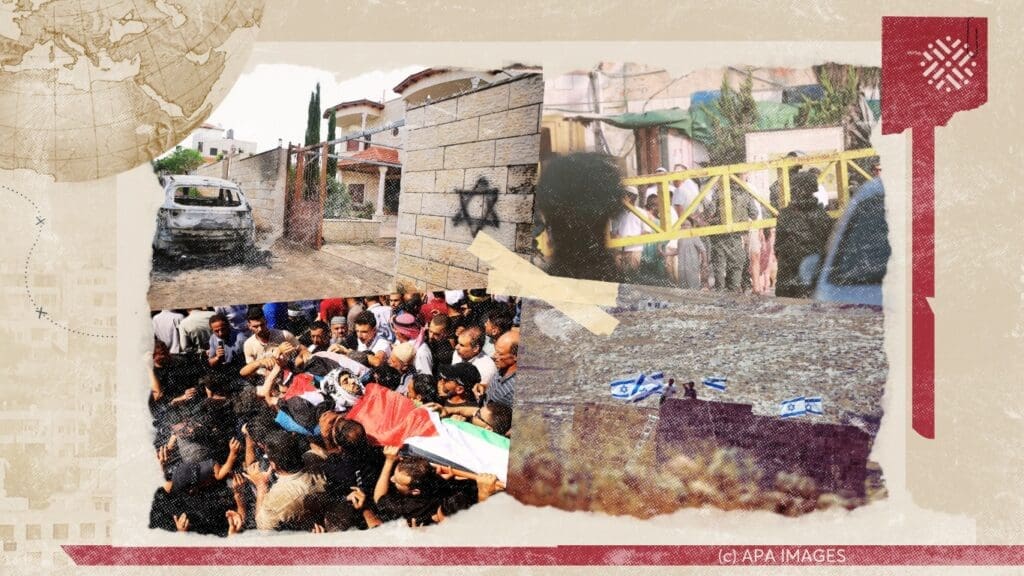
This Focus On engages with some of the most pressing aspects of this escalation in the West Bank since October 7, 2023. It features analyses by Al-Shabaka members and contributors that show how collective punishment of Palestinians has led to a collapse in access to food, healthcare, work, and education. The compilation also examines the Palestinian people’s resistance to the expansionist Israeli scorched-earth policy, and the political leadership’s complicity and failures. Al-Shabaka: The Palestinian Policy Network· Sep 23, 2026
 In this Policy Lab, Al-Shabaka analyst Amjad Iraqi joins host Tariq Kenney-Shawa to examine Israel’s electoral landscape, the limits of its so-called opposition camp, and what the election means for the future of the Palestinian struggle.
 Amjad Iraqi· Sep 22, 2026
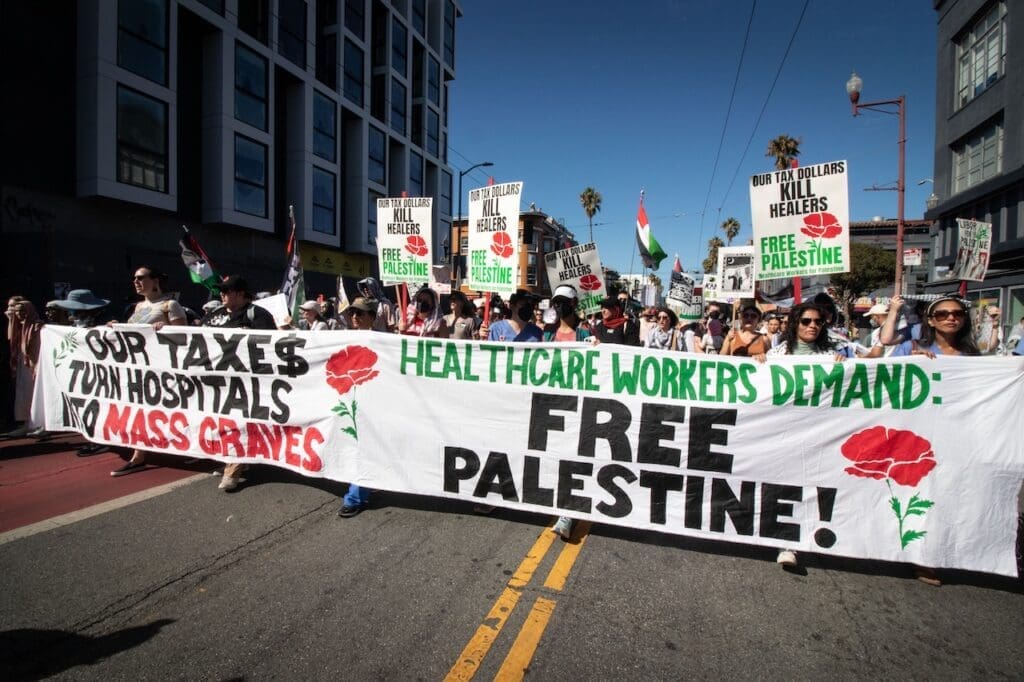
 This policy brief argues that the health sciences—from public health to epidemiology, nursing, medicine, pharmacology, and nutrition, among others—have a distinct role to play in preventing and documenting the ongoing Israeli genocide in Gaza and other settings, as well as in generating evidence to inform accountability processes.


 +
+
-
- Resources
- Media & Outreach
- The Network
Animal Welfare and Hierarchies of Suffering in Gaza
Introduction
On November 14, 2025, German media described four donkeys transported from Gaza by the Israeli organization Starting Over Sanctuary as having been “rescued,” before they were relocated to a zoo in Oppenheim. The animals were given German names and described as having “left behind hunger and misery, beatings and hardship.” Missing from the coverage was any mention of children in Gaza denied evacuation or of the Israeli genocide and continued attacks on Palestinians following the October 2025 “ceasefire.” This disjuncture—between the visibility and mobility granted to animal suffering and the persistent erasure of Palestinian human life—lies at the heart of a “theater of care.”
This commentary examines theater of care as a performance of humanitarian concern shaped by racialized hierarchies of grievability, in which some lives are treated as urgent while others are rendered politically suspect. It advances two arguments: First, animal rescue in Gaza operates within a colonial politics of care that privileges the apolitical innocence attributed to animals while rendering Palestinians less grievable. Second, animal welfare interventions are materially entangled with the dispossession of Palestinian survival infrastructure, particularly when animals essential to daily survival are removed under the guise of protection. It consequently reveals how humanitarian systems channel compassion in ways that manage suffering without demanding structural accountability, turning care into a tool of dispossession.
The Politics of Care
Humanitarian systems do not respond equally to all suffering. They are structured around particular forms of legibility, most notably the innocent victim, the passive body, and lives that do not challenge existing power arrangements. Echoing this, Miriam Ticktin describes a politics of care that mobilizes intervention around subjects constructed as morally pure and politically neutral. Within this logic, grievability is politically distributed: some lives are publicly mournable and therefore worth saving, while others remain ungrieved and uncounted.
Rescue efforts rarely acknowledge that the Israeli regime and its occupation forces kill animals in Gaza, both directly and indirectly through the siege and the genocidal conditions that erode life Share on X
Within this framework, animal suffering becomes uniquely legible because it is represented as detached from the political struggle, allowing their suffering to be narrated without confronting the structures of power that produce it. In the case of Palestine, this means that animal rescue can proceed without any confrontation with settler colonialism. This is evident in the way rescue efforts rarely acknowledge that the Israeli regime and its occupation forces kill animals in Gaza, both directly and indirectly through the siege and the genocidal conditions that erode life.
While compassion for animals is emotionally immediate and politically safe for humanitarian actors and international audiences, Palestinian human beings are rarely afforded this narrative position. Mainstream Western media reports and international animal welfare campaigns portray Palestinians as either incompetent caretakers or cruel perpetrators, legitimizing the removal of animals to the “civilized” care of Western or Israeli sanctuaries.
This logic is evident, for example, in the repeated characterization of Gaza’s Khan Younis Zoo as “the world’s worst zoo” in media coverage and in FOUR PAWS’s rescue campaigns, which celebrated the evacuation of surviving animals from Gaza while giving comparatively little attention to the structural conditions produced by repeated Israeli military assaults and the blockade. These narratives present the siege and destruction of Gaza as contextual background rather than as constitutive of the conditions they seek to remedy, recasting Palestinian neglect rather than structural violence as the primary explanation for animal suffering.
Within this framework, Palestinians cannot occupy the humanitarian role of innocent life in need of saving because they are construed as political. Animals, by contrast, are imagined to exist outside politics. This hierarchy is illustrated by the story of Hamed Ashour, a Palestinian resident of Gaza whose dog remained with him during the genocide, sharing his tent and providing companionship amid the devastation. Ashour’s story went viral, was translated into seven languages, and his post reached more than five million readers. Following the widespread attention, an Irish animal welfare organization contacted Ashour—not to ask about his safety but to explore the possibility of evacuating his dog from Gaza. As Ashour recalled, “They wanted a better life for him, a cleaner place, a wider sky. No one, however, thought to ask about me—the one living in a tent unfit even for a dog.” His account reveals how grievability is differentially distributed: the dog’s suffering elicited transnational concern and mobilized rescue efforts, while his own suffering did not.
Humanitarian compassion, in this sense, does not simply respond to suffering; it governs which suffering becomes visible and actionable while leaving intact the structures that produce it. The evacuation of animals from Gaza poses no direct challenge to Israel’s genocide or its siege, requires no legal reckoning with the destruction of civilian infrastructure, and entails no political confrontation with the source of violence from which animals are rescued. In this sense, animal rescue becomes a moral spectacle that perpetuates colonial violence.
Animal Extraction and Palestinian Dispossession
This theater of care also operates materially through the removal of animals from Palestinian survival systems. In June 2025, amid Israeli bombardment, Palestinians laid out a red carpet for their donkeys. It was simultaneously a gesture of tribute and political satire, highlighting the international community’s failure to protect Palestinians. It honored donkeys as companions in survival while exposing an international order in which care for animals appears more legible than protection for Palestinian human life.
International organizations extract animals that have become indispensable to the (Palestinian) people while reframing their removal as humanitarian rescue Share on X
Animals often play an infrastructural role in Palestinian life, making their removal a direct disruption of survival systems. In Gaza and across Palestine, animals are deeply embedded in mobility, subsistence and sumud. During the ongoing genocide, donkeys have been indispensable companions to Palestinians and often fundamental to survival. They transport injured people when ambulances are bombed, help with evacuation efforts, and carry food and water. Accordingly, the evacuation of animals from Gaza must be understood within the longer history of Israeli settler-colonial violence, which has systematically targeted Palestinian livestock and pastoral systems as part of its control over land, movement, and subsistence.
Israeli authorities have long issued military orders to restrict Palestinian access to grazing land, designate vast pasturelands as closed firing zones, and confiscate livestock under administrative and other regulations. Since 1967, large areas of traditional grazing land on the eastern slopes of the West Bank have been declared closed military zones, contributing to a decline of around 43% in livestock numbers by 1970 compared with 1966. The Israeli regime has also weaponized environmental and conservation governance as a tool of dispossession, whereby nature reserve designations are used to prevent Palestinian Bedouins from accessing grazing land. Israeli policies criminalize Palestinian pastoral life, including through fines and prosecutions when Palestinian herders’ animals, primarily camels, drink from water sources within protected areas.
Settler violence against animals operates within and reinforces this system of dispossession. Israeli settlers’ attacks on Palestinian-owned livestock mirror these logics of erasure. B’Tselem documented the killing of around 83 goats in al-Mu’arrajat in September 2024, alongside the theft of 350 sheep and the killing of over 100 animals in July 2025. Such acts dismantle the material foundations of Palestinian subsistence by targeting the livestock, mobility, and food systems on which rural Palestinian communities depend. They also challenge animal-rescue narratives that imply Palestinians are the primary threat to animal well-being.
Rather than protecting Palestinian survival systems, international organizations extract animals that have become indispensable to them while reframing their removal as humanitarian rescue. Since October 2023, international animal welfare organizations have intensified fundraising campaigns to “rescue” donkeys from Gaza, often in coordination with the Israeli military and through logistical arrangements that facilitated the animal looting by soldiers and reservists. For example, European institutions in Belgium and France coordinated with Starting Over Sanctuary to facilitate the evacuation of donkeys, even as EU countries maintained restrictive immigration and asylum policies toward Palestinians. Framed through a humanitarian discourse that promises to save donkeys from “abuse, hard labor and fear” and offer them “freedom and security,” these interventions obscured the Israeli regime’s role in producing the genocidal conditions from which the animals were being rescued. They also extended a much longer history in which Israeli and international animal welfare organizations have evacuated dogs, lions, and donkeys from Gaza, further entangling humanitarian care with the material dispossession of Palestinian life.
The theater of care enacted in Gaza reveals how international humanitarianism can function not as a remedy to colonial violence but as one of its modalities Share on X
These rescue operations are therefore not neutral humanitarian interventions but part of a broader colonial political economy of care in which animal suffering is mobilized to legitimize interventions that deepen the erosion of Palestinian life. Appeals such as those by Network for Animals, which claim that donations will fund rescue missions carried out with the support of the military, expose a striking contradiction: the very institution responsible for mass killing is recast as a facilitator of life. At the same time, Palestinians—the human victims and primary targets of Israeli genocidal policies—are positioned as the chief perpetrators of violence against animals. Care thus becomes a depoliticized spectacle through which humanitarian organizations and their donors claim moral action without confronting the structures of violence that make such rescues necessary. This is not benign. It is a racialized system of affect management through which Western and Israeli institutions, together with their supporters, experience the moral satisfaction of compassion while leaving intact the colonial structures that produce the suffering they seek to alleviate.
Conclusion
The theater of care enacted in Gaza reveals how international humanitarianism can function not as a remedy to colonial violence but as one of its modalities. By elevating nonhuman life as the apolitical and innocent victim, Western media and humanitarian organizations produce forms of care that render Palestinian life less grievable and politically suspect. In doing so, they make compassion hierarchical and compatible with the continued operation of settler-colonial violence rather than a challenge to it.
This dynamic extends beyond representation and narratives of erasure. It is deeply entangled with the material dispossession of the Palestinian people. The extraction of animals that make up a vital infrastructure for daily survival, mobility, and subsistence amid genocide demonstrates how animal welfare is co-opted to accelerate the dismantling of Palestinian life.
The aim here is not to oppose animal care to human care, nor to diminish the suffering of any beings. Rather, it is to ask why care for animals becomes internationally actionable while care for Palestinian human life is repeatedly deferred, securitized, or denied. In the end, the celebrated rescue of animals from Gaza does not represent a triumph of global empathy. Instead, it exposes a profoundly racialized political economy of care that allows international actors to practice compassion and a sense of moral superiority while actively facilitating the destruction of human life.
Asmaa Abu Mezied
Asmaa Abu Mezied is an economic development and social inclusion specialist working to address issues of gender, development, and climate change in the agriculture sector. Her research interests focus on the care economy, women’s collectives organizing in economic sectors, the private sector’s social accountability, and the intersection of Palestinian political, agricultural, and environmental identities. She served as Al-Shabaka’s 2022 Visiting Gaza Fellow and was previously an Atlas Corps Fellow in partnership with President Obama Emerging Global Leaders, a Gaza Hub-Global Shaper (an initiative of World Economic Forum), and a 2021 Mozilla Foundation Wrangler at “Tech for Social Activism” space.
Latest Analysis
Under Siege: The West Bank After October 7
Genocide and the Limits of Israeli Elections
Health Sciences and Genocide Prevention in Gaza and Beyond
We’re building a network for liberation.
As the only global Palestinian think tank, we’re working hard to respond to rapid developments affecting Palestinians, while remaining committed to shedding light on issues that may otherwise be overlooked.