Civil Society
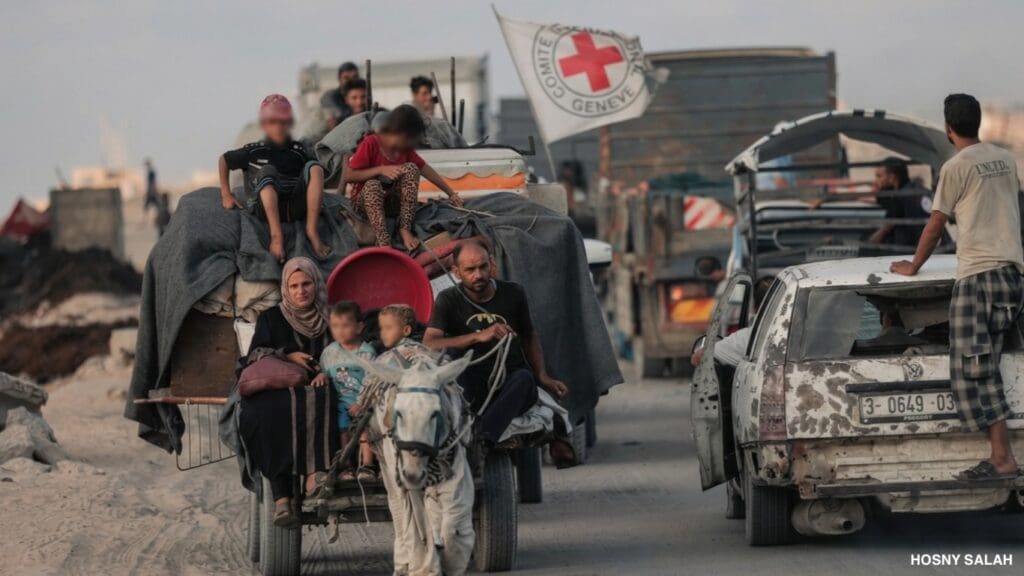
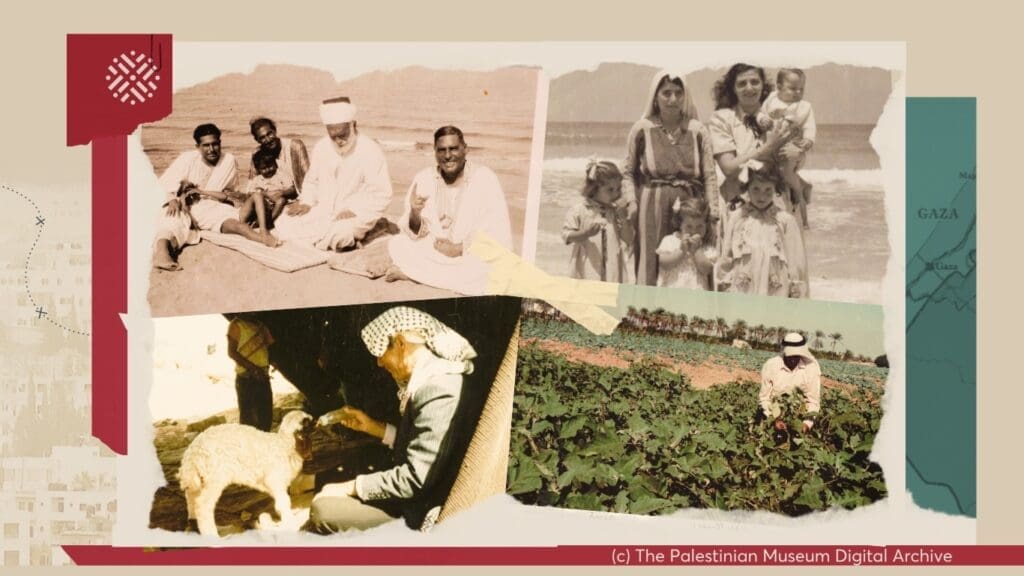
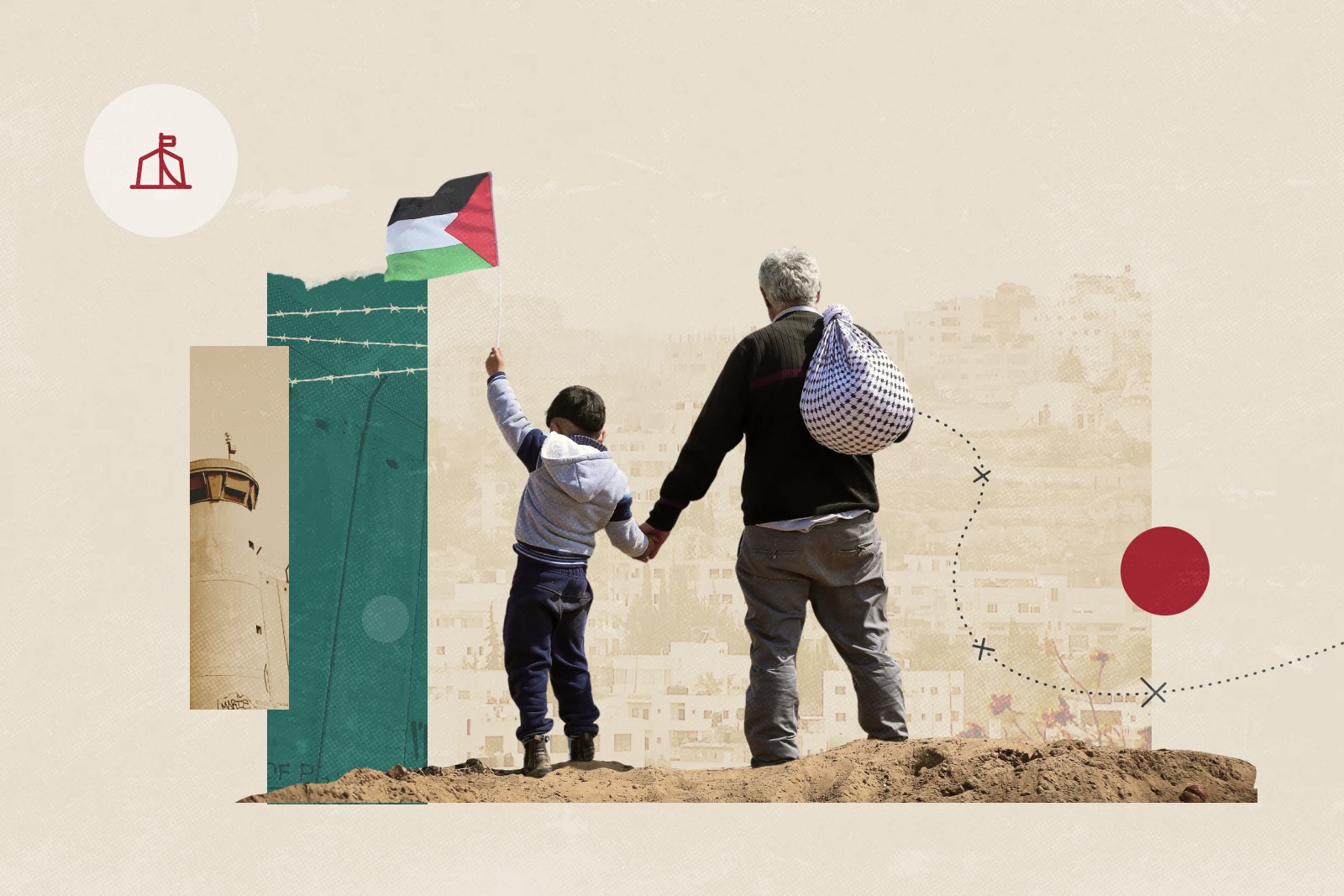
After Hamas’s recent announcement that it will hand over governing authority in Gaza to the National Committee for the Administration of Gaza (NCAG), urgent questions about who will shape Gaza's future and on whose terms have reemerged. These questions are particularly salient given that the NCAG’s framework reflects the same technocratic and externally imposed logic that has come to characterize the dominant international proposal for Gaza's reconstruction: one that treats it as a technical exercise in disaster management, sidelining Palestinian sovereignty, return, and self-determination. In contrast, this roundtable asks what it means to understand Gaza as an Indigenous region rather than simply a besieged strip or humanitarian space. Nour Joudah and Dena Qaddumi explore how Indigenous frameworks reshape prevailing understandings of urbanism, reconstruction, and governance; why reconstruction must begin with Palestinian agency and reclamation rather than externally designed colonial master plans; and how rebuilding is already taking place through everyday forms of Indigenous endurance, social organization, and spatial resistance under conditions of ongoing genocide.
Nour Joudah,Dena Qaddumi· Jul 23, 2026
 Politics
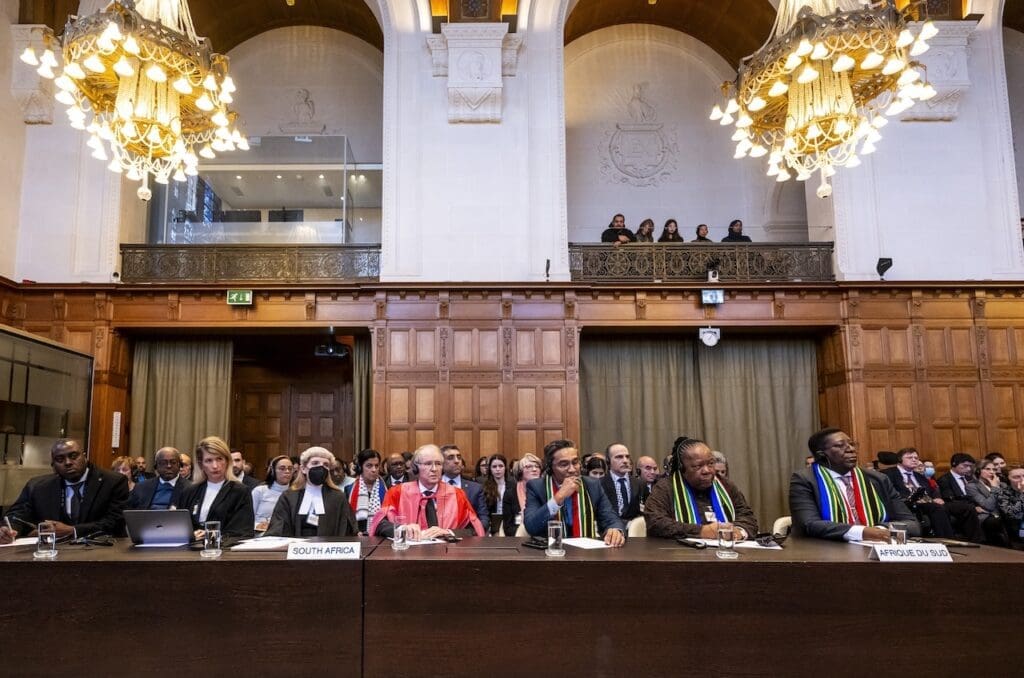
The advisory opinions issued by the International Court of Justice on Palestine reveal both the possibilities and the limits of international law, which has come under intense scrutiny amid the Israeli regime’s ongoing genocide in Gaza and broader settler-colonial project across Palestine. Acknowledging the persistent gap between legal principle and political enforcement, this policy brief examines how these opinions can be leveraged to strengthen legal and diplomatic accountability at both the international and domestic levels. It argues that the opinions provide an opportunity to move legal discourse on Palestine beyond the dominant UN framework of statehood within the 1967 borders and to reassert the Palestinian people’s right to self-determination within a broader liberation-oriented framework aimed at ending settler colonialism and advancing justice for Palestinians as a whole.
Al-Shabaka Dana Farraj
Dana Farraj· Jul 1, 2026
 Politics
The US-Israeli war on Iran and Lebanon, as well as the ongoing genocide in Palestine, are reshaping the political landscape of the region. Alliances are being recalibrated, and old assumptions about US power are being tested. The war has also underscored how deeply the global economy remains tied to fossil fuels and to the strategic importance of the Gulf within international energy and trade networks. In this roundtable, Palestinian analysts Diana Buttu and Adam Hanieh examine what this moment reveals about the changing architecture of US imperial power, the regional order now taking shape, and the implications for the struggle for Palestinian liberation.
Diana Buttu,Adam Hanieh· Jun 10, 2026
 Politics
People across the world are living through a moment of profound crisis. The ongoing genocide in Gaza, the US-Israeli war on Iran and Lebanon, the resulting energy and economic shocks, and the erosion of the international legal order are unfolding alongside the fragmentation of the Western-led global system. Together, these converging tremors are exposing the limits of US hegemony, reshaping the strategic positions of Arab Gulf states and China, and intensifying debates over multipolarity, regional realignment, and South-South solidarity. In this roundtable, Yara Hawari and Tareq Baconi reflect on this impasse, highlighting the centrality of Palestine to understanding the historic transformations the world is witnessing today. They discuss the bankruptcy of the liberal international order, the changing dynamics of the US-Israeli imperial power in West Asia, and the ways Palestine has emerged as a converging point through which a different global order may be forced into being.
Al-Shabaka Yara Hawari
Yara Hawari,Tareq Baconi· May 26, 2026
 Politics
In this policy lab, Josh Ruebner and Ahmed Moor join host Tariq Kenney-Shawa to examine the fight over the Block the Bombs Act, wider efforts in Congress to restrict US military support for Israel, and what these battles reveal about the future of Palestine advocacy in US politics.
Al-Shabaka Tariq Kenney-Shawa
Tariq Kenney-Shawa· May 21, 2026
 Civil Society
We cannot understand Gaza’s endurance through a binary that casts Palestinians, individually or collectively, as either heroic in their resistance or passive victims. Rather, we must approach it through a decolonial conception of sumud (steadfastness): a historically situated, relational, and materially conditioned practice of collective endurance that emerges, shifts, and persists within ongoing colonial violence.
Abdalrahman Kittana· May 12, 2026
 Politics
This policy brief argues that, by maintaining the classification of such zones as provisional security arrangements rather than permanent borders, the Israeli regime exercises territorial control while limiting the immediate legal and political costs associated with declared annexation.
Ahmad Ibsais· Apr 21, 2026
 Civil Society
In February 2021, Defense for Children International–Palestine (DCIP) reported that Israeli interrogators had raped a 15-year-old Palestinian boy in detention. Rather than investigate the allegation, Israeli forces raided DCIP’s offices and later designated it—along with five other Palestinian human rights groups—as a “terrorist organization.” While such abuses and crackdowns are not new, this moment marked a decisive escalation: the shift from harassment of Palestinian civil society to its outright criminalization with the full support and participation of the US. In 2025, the Trump administration designated six Palestinian organizations under counterterrorism frameworks before advancing even further, sanctioning leading human rights groups for engaging with the International Criminal Court. These measures move beyond targeting individual actors to undermining the very infrastructure of international accountability. This policy brief argues that the campaign by the US and the Israeli regime against Palestinian civil society and international law carries global consequences, threatening mechanisms designed to hold state violence in check. It concludes with recommendations for how Palestinian organizations and their allies can adapt, defend themselves, and pursue justice in an increasingly hostile environment.
Al-Shabaka Tariq Kenney-Shawa
Tariq Kenney-Shawa· Mar 31, 2026
 Politics
As the US and Israel escalate their assault on Iran, the Israeli regime has been constructing a war economy to sustain prolonged military campaigns while evading accountability. In September 2025, Prime Minister Benjamin Netanyahu urged Israelis to transform the country into a “Super Sparta” of the Middle East—more militarized, economically self-reliant, and capable of sustaining protracted conflict despite mounting external pressure. This policy brief argues that this rhetoric reflects an emerging doctrine: a political-economic project structured around permanent national mobilization, preventative warfare, and accelerated defense-industrial expansion. Yet the Israeli regime’s shift toward self-reliance is not producing full autarky. Instead, the war economy is consolidating into a hybrid model that combines domestic substitution in critical defense sectors with deeper integration into transnational supply networks, thereby dispersing sanctions risk. This configuration blunts the impact of conventional accountability tools, such as fragmented or weakly enforced arms embargoes. As a result, effective international responses must move beyond traditional sanctions frameworks and instead target the material infrastructure and dependency nodes that sustain Israel’s war economy.
Ahmed Alqarout· Mar 11, 2026
 Politics
Noura Erakat and Jake Romm joined us for a policy lab episode on how Gaza helped shatter the old status quo and what that break reveals about the world being built in its wake.

Media & Outreach

Quote
Though the speech broke from a failed approach toward Israel, it was still based on flawed and tendentious attitudes and history.
Al-Shabaka Fathi Nimer
Fathi Nimer· Jul 9, 2026
A rare admission from within Likud has intensified scrutiny of the party's growing ideological overlap with Itamar Ben-Gvir's Jewish Power.
Al-Shabaka Amjad Iraqi
Amjad Iraqi· Jul 6, 2026
Starmer's leadership may be over, but the impact of his government's support for Israel's genocide in Gaza & attack on migrants will endure, writes Yara Hawari.
Al-Shabaka Yara Hawari
Yara Hawari· Jun 22, 2026