topicPolitics
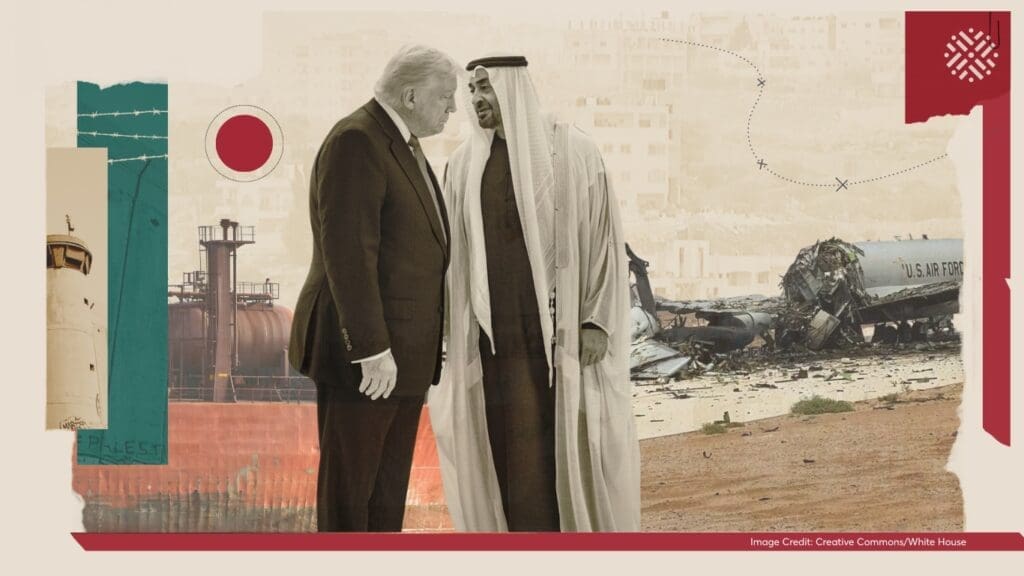
The announcement of the National Committee for the Administration of Gaza (NCAG), a 15-member technocratic body chaired by Ali Shaath, signals a shift toward depoliticized governance in Gaza amid ongoing genocide. Shaath, a Palestinian civil engineer and former deputy minister of planning and international cooperation, will lead an interim governing structure tasked with managing reconstruction and service provision under external oversight. While presented as a neutral technocratic governing structure, the NCAG is more likely to function as a managerial apparatus that stabilizes conditions that enable genocide rather than challenging them.
This policy memo argues that technocratic governance in Gaza—particularly under US oversight, given its role as a co-perpetrator in the genocide—should be understood not as a pathway to recovery or sovereignty, but as part of a broader strategy of genocide management.

Yara Hawari· Jan 26, 2026
We close 2025 with curated highlights from this year's most powerful conversations. From the complexities of Palestinian politics to global responses to Gaza's genocide, this episode captures the moments that defined the struggle for justice over the past twelve months.

Al-Shabaka: The Palestinian Policy Network· Dec 22, 2025
Inès Abdel Razek and Munir Nuseibah joined Al-Shabaka for a conversation on the politics behind the UNSC resolution, the implementability of the US-Israeli plan, and the scenarios now being advanced for Gaza and for Palestine more broadly.


European empires used Christian missions to legitimize conquest in Africa and advance imperial interests, laying the groundwork for a political form of Christian Zionism. British evangelicals were central in transforming Christian Zionism from a theological belief into an imperial strategy by promoting Jewish resettlement in Palestine as a means of extending British influence. This fusion of religious ideology and imperial ambition endures in contemporary Christian Zionist movements, which frame modern Israel as the fulfillment of biblical prophecy and recast Palestinian presence as an impediment to a divinely ordained order.
This policy brief shows how these narratives and their policy effects have taken root in the Global South, including in South Africa. In this context, Israeli efforts increasingly rely on Christian Zionist networks to weaken longstanding solidarity with Palestinians and cultivate support for Israeli occupation.

Fathi Nimer· Dec 7, 2025
International law expert Shahd Hammouri examines the details and far-reaching ramifications of UN Security Council Resolution 2803, which endorses US President Donald Trump’s colonial plan for Gaza amid the ongoing genocide.
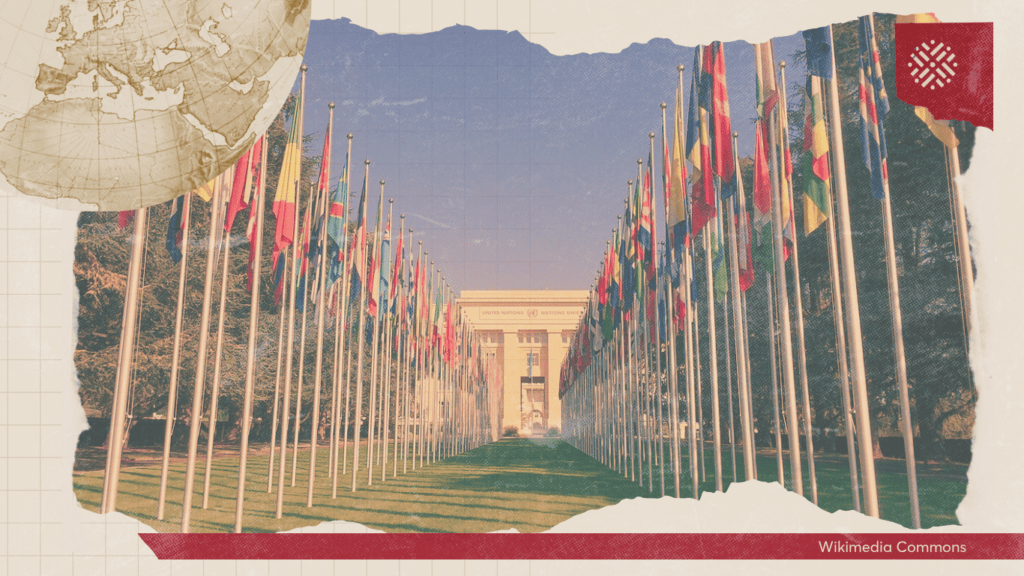
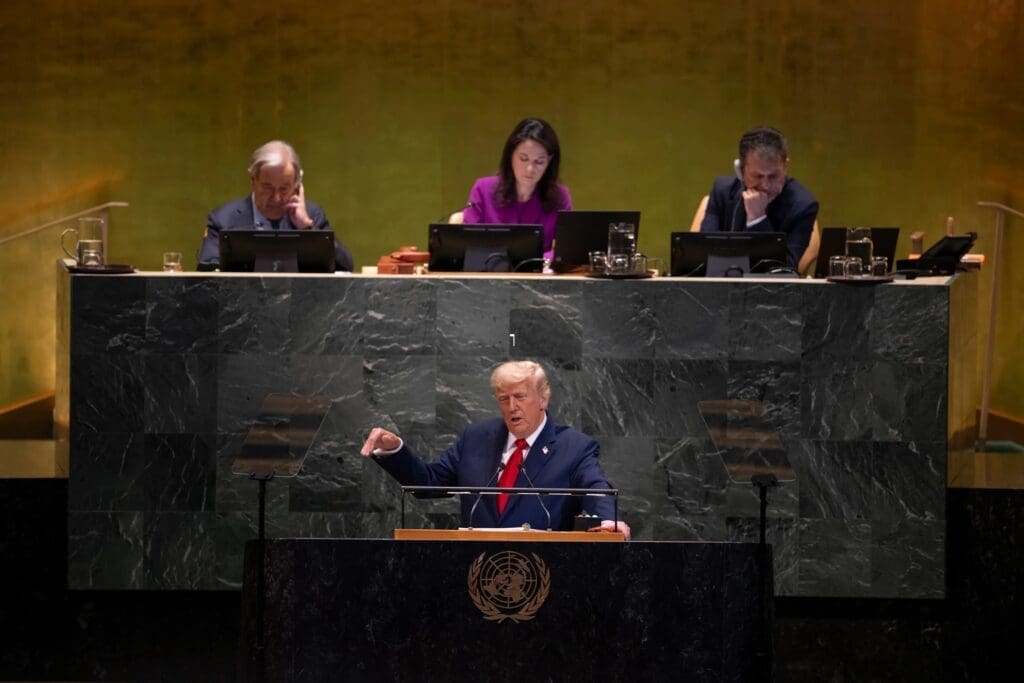
On November 17, 2025, the UN Security Council passed Resolution 2803 endorsing US President Donald Trump’s twenty-point plan for Gaza. The vote, pushed through after weeks of US pressure, establishes two supposedly “transitional” bodies to take control of Gaza: a Board of Peace tasked with overseeing aid delivery, reconstruction, and day-to-day administration, and an International Stabilization Force to take over security and disarm Hamas.
Notably, the resolution does not refer to the genocide of the past two years, nor does it address accountability for it. Instead, this policy memo shows how the resolution repackages colonial control over the Palestinian people in Gaza, rewards the US—a co-perpetrator of genocide—with control over Gaza and its potentially lucrative reconstruction process, while simultaneously relieving the Israeli regime of all of its responsibilities as an illegally occupying power. Rather than advancing justice, the UN has once again undermined its own legal principles under US pressure.

Yara Hawari· Nov 20, 2025
In this policy lab, Leila Farsakh and Abdaljawad Omar join host Tariq Kenney-Shawa to trace the historical trajectory leading to October 7, examine how Gaza has become both a site of extermination and a catalyst for global rupture, and discuss what comes next for Palestinians.


For two years, Israel has inflicted mass starvation, staggering death tolls, and relentless destruction on Gaza and its inhabitants. International efforts to recognize Israeli war crimes and halt the eradication of the Palestinian people continue to lag and fall short. On September 16, 2025, the UN Commission of Inquiry confirmed what Palestinians have identified since the outset: Israel is committing genocide. On September 29, US President Donald Trump unveiled a proposal that promises a ceasefire but subordinates Palestinians in Gaza to external governance, denies them self-determination, and entrenches Israeli control over the land. Framed as a peace initiative, the plan is in fact an attempt by the US to shield the Israeli regime from accountability, exemplifying Western complicity in the colonization of Palestine and the extermination of its people. In this context, Hamas’s agreement to release all Israeli captives signals its commitment to ending the ongoing violence, while simultaneously shifting the onus onto the Israeli regime and the Trump administration to clarify and operationalize their commitments to the ceasefire process.
This Focus On gathers Al-Shabaka’s analyses from the past year, offering urgent context to understand the genocide and its regional impact. It traces the Israeli regime’s expansionist campaign across Gaza, the West Bank, and the wider region, exposing Western complicity not only in enabling its crimes but also in protecting it from justice. At the same time, it highlights initiatives that resist Israeli impunity while advancing accountability and genuine liberation.

Al-Shabaka: The Palestinian Policy Network· Oct 7, 2025
Amira Hala joins us to discuss the European Legal Support Center's latest report, which exposes and contextualizes the systematic repression tactic of proscription against pro-Palestinian solidarity activism in Europe.

Al-Shabaka: The Palestinian Policy Network· Sep 30, 2025
This policy memo shows how China’s “biased impartiality,” which privileges the Israeli regime, drives its strategic distancing from the genocide in Gaza. This position is not simply the result of US dominance over Israel-related affairs but a calculated decision to protect China’s long-term interests. By calling for Palestinian unity without exerting pressure on the Israeli government, Beijing shields its ties with the Zionist state under the guise of restraint. In addition, it deflects responsibility for stopping the genocide onto the UN Security Council, casting ceasefire, humanitarian access, and prisoner release as obligations for others in order to absolve itself of direct accountability.

Razan Shawamreh· Sep 16, 2025
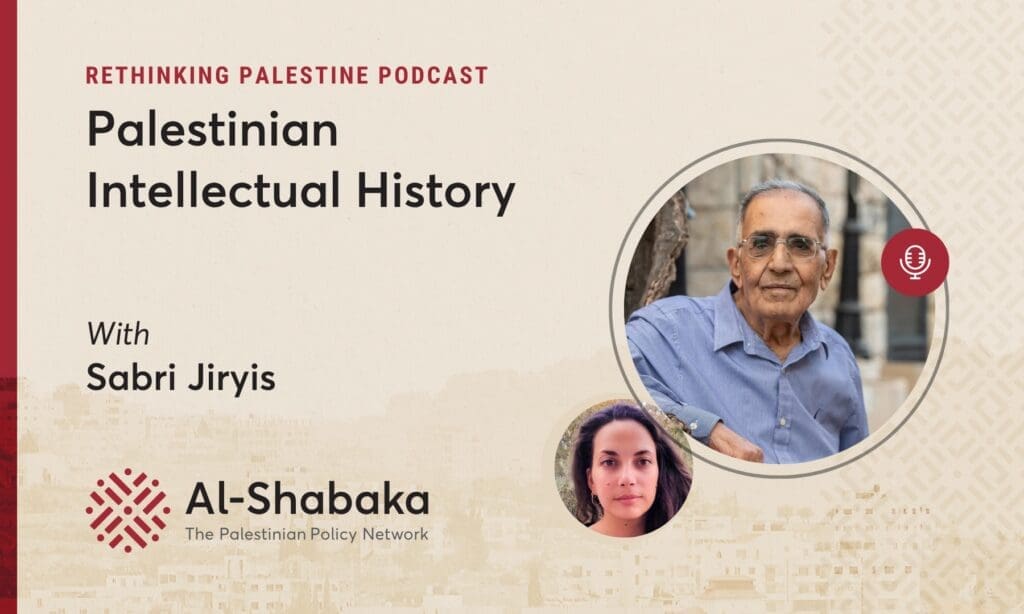
In this episode, Al-Shabaka policy analysts Diana Buttu, Inès Abdel Razek, and Al-Shabaka’s Co-Director Yara Hawari, are interviewed by Al-Shabaka's commissioning editor Dina Hussein on the recent wave of Palestine State recognition by several European powers as a policy response to the ongoing genocide in Gaza. This podcast episode was originally recorded in June 2025.


+
Media & Outreach
Talal Abu Rokbeh told The New Arab that Israel’s war has severely damaged Gaza’s social fabric and intensified divisions. "Displacement was the primary goal of Israel, and this has impacted the population, social relationships and how people deal with one another."

Talal Ahmad Abu Rokbeh· Jan 20, 2026
After systematically dismantling Gaza's health system, Israel has trapped patients needing urgent treatment in a permit regime that delays, denies and restricts access to life-saving care

Ghada Majadli· Jan 19, 2026
Palestinian futures are being decided for them yet again as they are dispossessed by the new Trump Plan, argues Yara Hawari. When will Palestinians be free of repackaged colonialism?

Yara Hawari· Jan 6, 2026
We’re building a network for liberation.

As the only global Palestinian think tank, we’re working hard to respond to rapid developments affecting Palestinians, while remaining committed to shedding light on issues that may otherwise be overlooked.