




Introduction
The Israeli genocide in Gaza has laid bare the extent to which the world remains structured by racial colonial hierarchies and exposed the limits of an international legal order that emerged alongside Western imperial expansion. In this roundtable, Palestinian legal scholar Noura Erakat and Jake Romm, legal advisor and US representative for the Hind Rajab Foundation (HRF), reflect on what becomes of international law after Gaza.
They examine the strategic deployment of international law in the service of political struggle and how international legal obligations can be mobilized through domestic courts to pursue accountability. They argue that the Palestinian liberation struggle not only exposes the contradictions of international law as it is applied today, but also remains central to any effort to build a more egalitarian system.
This roundtable is adapted from Al-Shabaka’s policy lab conversation held in February 2026 and has been edited for publication.
As claims of the demise of the rules-based international order and international law proliferate, what do these concepts mean, and what remains of them today?
Noura Erakat
We need to start by separating two things that are often conflated: the rules-based order and international law. International law is created through a specific multilateral process: the negotiation of treaties, the development of customary law through state practice, and the codification of norms that states consider legally binding. It governs relations among states, between states and individuals, and between states and international organizations.
The rules-based order is a vaguer concept, referring to norms and rules that particular institutions or powers may establish without multilateral negotiation. To grasp what it means, we need to understand how the US has long positioned itself not as one of 193 UN member states, but as a kind of global police force. Because there is no coercive enforcement authority in international law outside of Chapter VII of the UN Charter—which is itself subject to Security Council vetoes—the US has inserted itself as the arbiter of when and how rules apply. That is the rules-based order: US power dressed up in the language of universal principle.
Officially, international law emerged alongside 15th-century European imperial expansion in Africa and developed through the colonization of Indigenous lands. It was built to mitigate conflict among imperial powers competing to extract resources, not to protect the dispossessed people.
How do we reconcile international law’s imperial origins with its role in challenging oppression and advancing liberation struggles?
Jake Romm
At the end of World War II, two things happened simultaneously and in opposite directions. On the one hand, international institutions were created on the premise of a world without aggression, one in which states could come together as equals before the law and resolve conflicts through diplomacy. On the other hand, the US positioned itself as the guarantor and enforcer of that system, effectively placing itself above it.
The system functioned, albeit imperfectly, violently, and with constant contradictions, as long as US power went relatively unchallenged. The US had an interest in maintaining what we might call hegemony—not just domination, but the active consent of others to that domination. Ultimately, hegemony requires convincing people that your power is in their interest. Maintaining it, therefore, required at least a gesture toward international legitimacy.
Domination and aggression, which we were told had been outlawed, have become the law. Gaza did not cause this. It made it undeniable Share on X
That gesture, weak as it was, did create a real, if limited, opening. Other states and non-state actors could speak the same language as power, make immanent critiques of it, and, in that way, shape behavior at the margins. There was also an irony embedded in the system’s own logic. Because the US empire was premised on opening the world to market penetration, it needed states to be economically and politically functional. Over time, that meant more and more states developing a genuine international legal and diplomatic personality that they had not previously possessed. And let us remember that in 1945, there were far fewer states than there are today.
The US offer to Western capitalist countries was concrete: we will rebuild you after World War II, contain the Soviet threat, and guarantee peace through these new institutions. But once the Cold War was won and the US stood as an unchallenged global empire, why maintain that offer? The bargain had expired. The states that had grown into international actors in the meantime were no longer so easy to manage. The system had created the conditions for its own challenge.
Noura Erakat
From 1955 onward, what we might call the Third World Revolt changed the terrain considerably. This was the moment when newly independent states and national liberation movements began to see ways of using international law to their advantage. Together, they consolidated their power at the UN and established a new political majority. For the first time, they were no longer merely subject to international law; they were using it strategically.
In 1974, the Palestine Liberation Organization achieved juridical recognition at the UN. A year later, Zionism was condemned as a form of racism and racial discrimination, and in 1977, guerrilla fighters were recognized as legitimate combatants with rights under the Additional Protocols to the Geneva Conventions. These were real victories. But we have to be clear: it was not the law that produced these outcomes; it was political power.
Why has Gaza come to represent a breaking point for the international order?
Jake Romm
The Israeli regime has long been a partner in the US imperial project. It was created as a colonial entity at the very moment when people around the world were ostensibly decolonizing, born at a time when the empire was supposedly in retreat. For decades, it has operated as a pre-1945 type of entity: expansionist, premised on racial and ethnic supremacy, and routinely violating the sovereignty of its neighbors and the laws of war developed after World War II.
It became so deeply integrated into the Western imperial project that when it entered this acute phase of genocide against Palestinians in Gaza, the West faced a choice: Do we finally make international law meaningful for the first time, or do we support this?
The choice made—to support the genocide, supply arms, provide intelligence, and offer political cover—reveals that the colonial core of the international system, always present but often papered over, is now the operating principle itself. Domination and aggression, which we were told had been outlawed, have become the law. Gaza did not cause this. It made it undeniable.
Noura Erakat
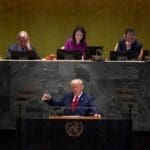
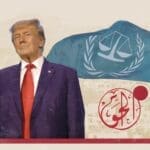
The genocide in Gaza occurred against the backdrop of a long process in which the US steadily distanced itself from the UN and diminished its significance after recognizing that it could no longer control it. The Trump administration is now making a bid to supplant the UN as the primary authority in the international system. The Board of Peace, with Trump as its lifelong chairman, was initially presented as a mechanism to address Gaza, but it is now clear that it is a global project.
If the possibility of an egalitarian international law has been destroyed in Palestine, then it must also be rebuilt there for the rest of the world Share on X
Gaza has not only exposed this shift in the international order; it has also laid bare the deeper contradictions embedded within international law itself. Palestine, more broadly, exemplifies the extent to which the world remains structured by colonial hierarchies, divided between a Global North and a Global South, in which might makes right. Racism inherent in international law has been fully exposed there.
But I would argue that if the possibility of an egalitarian international law has been destroyed in Palestine, then it must also be rebuilt there for the rest of the world.
How should movements and states think about using international law as a tool going forward?
Noura Erakat
The first thing is to be honest about what international law, as a tool, is actually for. When I speak to audiences in the Global South, I do not need the language of international law to explain Palestine. I can simply speak of colonialism, resistance, dignity, and land rights, and people understand with their entire being because they are descendants of this very history.
The language of international law is most useful for addressing Western audiences and exposing contradictions. It holds a mirror up to those who claim to believe in universalism and equality and asks whether those principles apply here. In this sense, international law functions as a discursive mechanism. If Palestinians are considered human, their rights should not be in question. It therefore forces those who profess universal principles to confront their own inconsistency.
Using international law discursively, without collective power behind it, makes for excellent footnotes and nothing more Share on X
But I want to be clear: using international law discursively, without collective power behind it, makes for excellent footnotes and nothing more. The Third World Revolt succeeded because there was a majority not only at the UN, but also in arms and in the streets across the globe. Legal arguments are effective when backed by power.
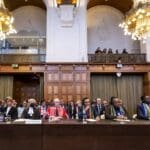
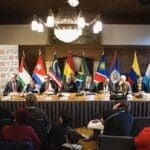
We are seeing some of that power begin to coalesce today, in the formation of the Hague Group and in South Africa’s decision to bring its ICJ case despite intense pressure and threats. We cannot rely on the law to do the work for us without building the collective power necessary to make the law politically relevant.
For those working in or studying international law, I would say: do not use the law simply to win cases, as many lawyers do. Too often, the political work is sacrificed in pursuit of a judicial victory. Take, for example, the Human Rights Watch and Amnesty International reports on Israeli apartheid. They were rightly seen as important advances. But they were also limited. In seeking to make their arguments more judicially palatable, they stopped short of a deeper critique of racism, Zionism, and colonialism. In doing so, they limited the force and impact of their work.
Jake Romm
I need to emphasize that international law is not the tool that will save us. It can be a profoundly useful tool, but it is not the tool that sets people free. People set themselves free. That assumption underpins our work at HRF, for example.
There is sometimes a misconception that what we do is international law in the traditional sense, similar to the cases brought before the International Criminal Court (ICC) or the International Court of Justice (ICJ). Those mechanisms matter, and the ICC arrest warrants against Israeli Prime Minister Benjamin Netanyahu and others, as well as the ICJ genocide case, are genuine achievements. But international legal mechanisms move slowly, are chronically under-resourced, and remain deeply vulnerable to political interference.
International law can be a profoundly useful tool, but it is not the tool that sets people free. People set themselves free Share on X
At HRF, we focus on domestic law. The crucial insight here is that states have incorporated many of their international obligations into domestic legal frameworks. The Genocide Convention, Article 146 of the Geneva Conventions, and universal jurisdiction provisions are on the books in nearly every state, including the US. The US War Crimes Act allows for the prosecution of war crimes regardless of nationality.
When we file cases in national jurisdictions against individuals, whether soldiers, arms suppliers, or corporate actors, we do several things at once. We document and narrate the genocide in ways that are legible to audiences trained to think in terms of individual criminal responsibility. If you can point to a specific person and say, “On this date, in this place, this individual committed this act, which constitutes a war crime and a constituent act of genocide,” it becomes comprehensible in a way that broader structural critiques often do not.
We also insist on the larger context. Each case is embedded within the broader Israeli genocidal campaign. When pursued across multiple jurisdictions simultaneously, these cases reveal not a story of a few bad apples, but a composite picture showing that the entire “campaign” is criminal because its aims are genocidal. There is also precedent for holding accountable those who are not direct perpetrators.
There is a framing from the legal scholar Rob Knox that I return to often. Writing about how leftists and Marxists can engage with international law—which is, at its core, bourgeois law—he argues that if you make the right demand at the right time and insist on it unconditionally, it can function as a stand-in for revolution, even if it is not itself a revolutionary demand.
That is how I think about our work. When we insist, unconditionally, that states undertake these prosecutions, arrest Israeli perpetrators traveling through their territory, and prosecute their own nationals who have participated in these crimes, we are making a demand that falls entirely within the existing legal framework. Nothing new needs to be invented. But if states were actually to do this en masse, it would signal, for the first time, that international law has real teeth independent of US domination. That, in itself, is a revolutionary vision.
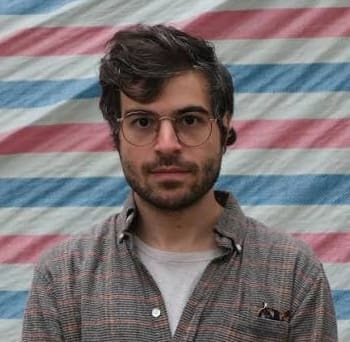
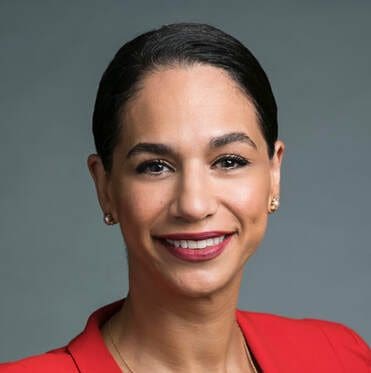
Noura Erakat is a human rights attorney and Professor in the Department of Africana Studies and the Program in Criminal Justice at Rutgers University, New Brunswick. Her research focuses on human rights law, humanitarian law, refugee law, and critical race theory, with a particular focus on Palestine. She is the author of Justice for Some: Law and the Question of Palestine (Stanford University Press, 2019), a co-founding editor of Jadaliyya, and an editorial committee member for the Journal of Palestine Studies. She holds a JD from UC Berkeley and an LLM in National Security from Georgetown University Law Center.